


Most people think the most important part of a building is what they can see: the roof, the walls, the architecture. Engineers know better.
If you want to understand whether a building will stand the test of time, you need to look at its foundations. The Leaning Tower of Pisa is perhaps the world’s most famous reminder that what happens below ground can be more important than what happens above it.
The same principle applies to trees.
While tree stability assessments often focus on stems, crowns, and wind loads, the real foundations of a tree are hidden underground. Roots and soil form a complex and dynamic system that ultimately determines whether a tree remains standing or fails.
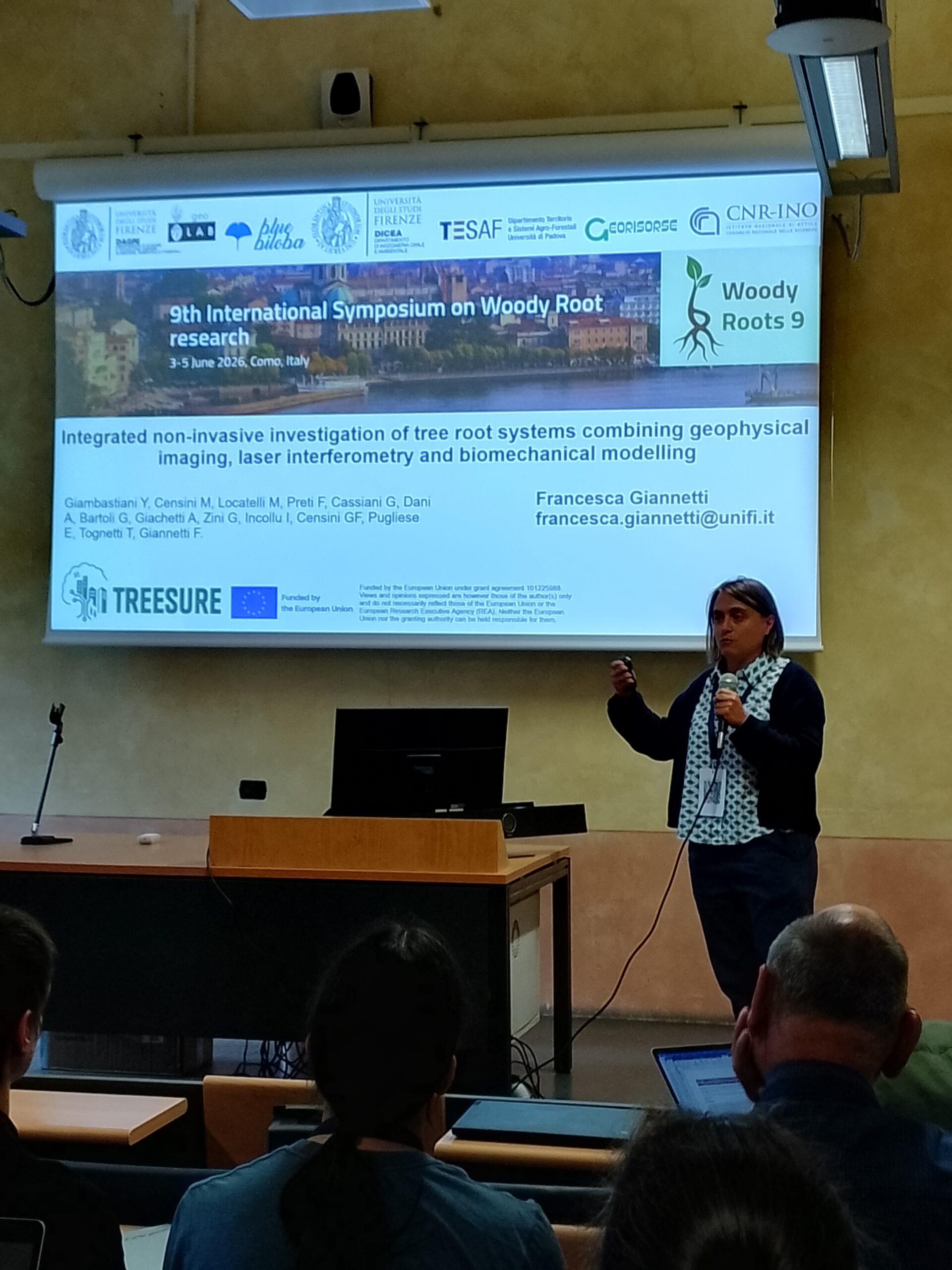
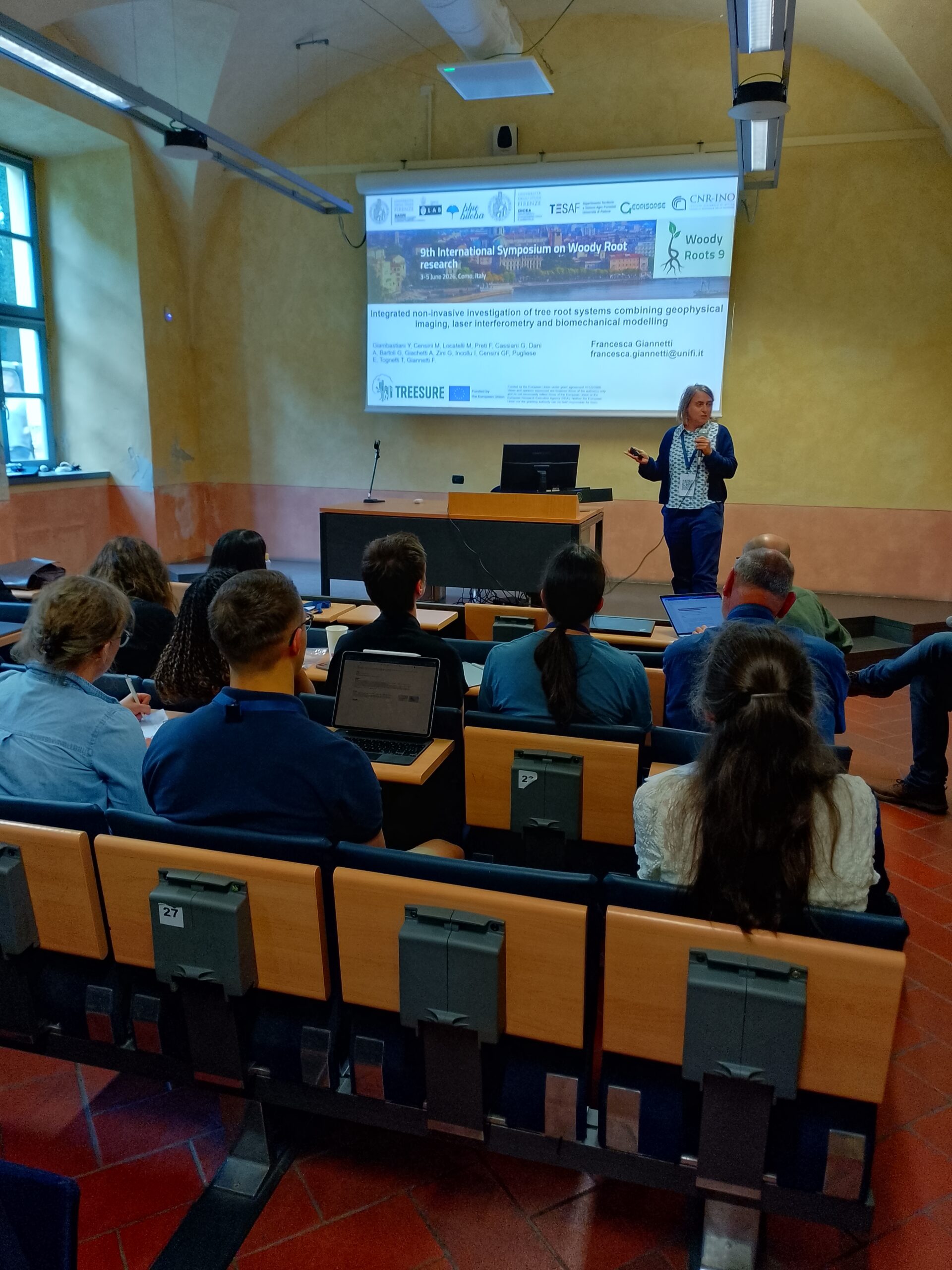
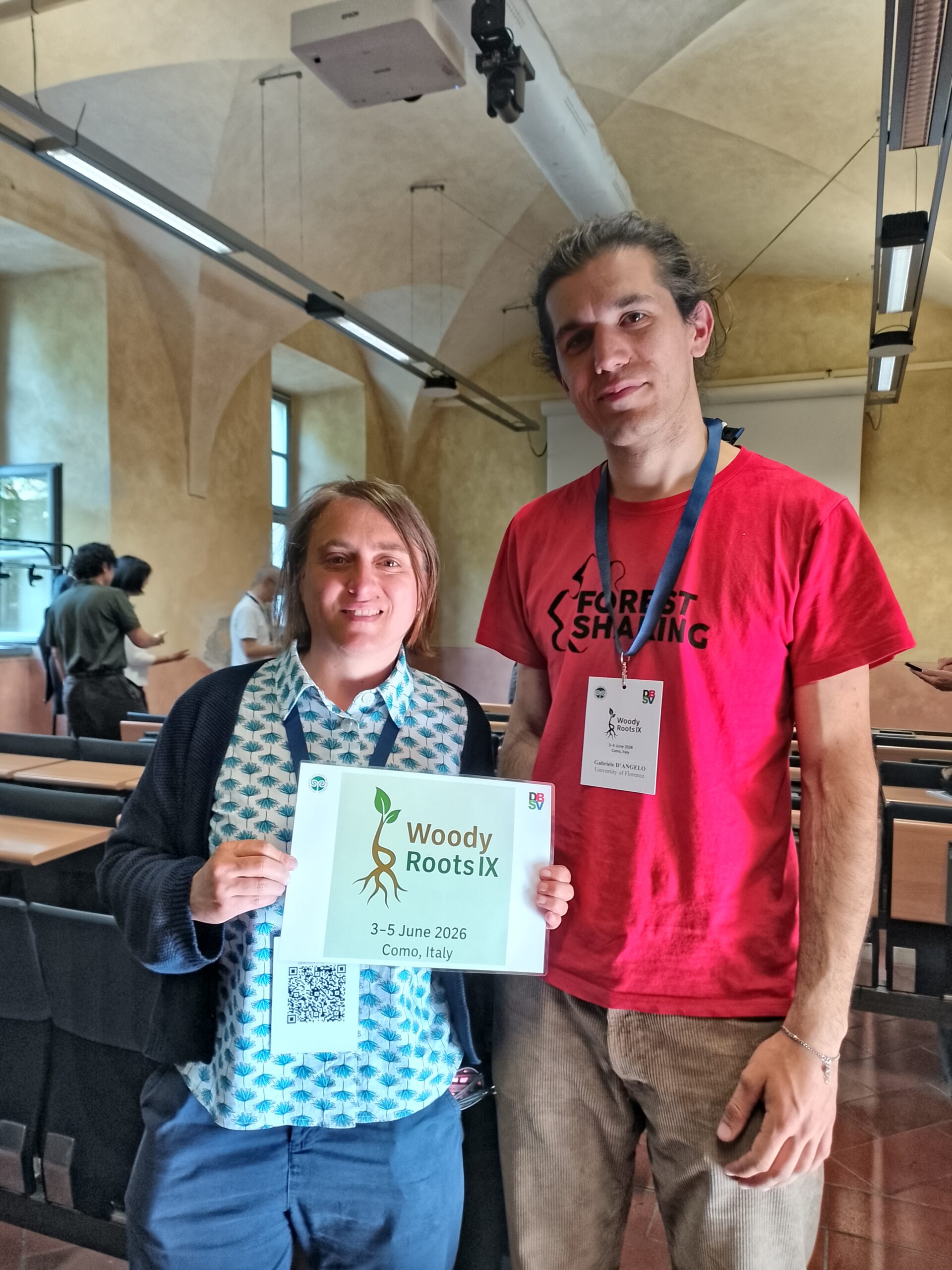
This was one of the key messages presented at the 9th International Symposium on Physiological Processes in Roots of Woody Plants, held in Como, Italy, from 3–5 June 2026. During the session “Innovations for Root Research and Sustainable Ecosystem Management”, Francesca Giannetti (University of Florence) presented the latest results of an interdisciplinary research, lead by Bluebiloba and Università degli Studi di Firenze, effort developed within the European TREESURE project, aimed at improving our understanding of tree anchorage and stability through innovative monitoring and modelling approaches.
Looking Beyond Wind
Tree stability is traditionally assessed through controlled pulling tests, which simulate the effects of wind loading and help estimate the maximum force a tree can withstand before failure.
However, tree failure is not only a wind problem.
When a tree is subjected to mechanical stress, the behaviour of the root system and the surrounding soil plays a crucial role. Yet these components are often treated as static elements in conventional assessments.
Our research suggests that this assumption may oversimplify reality.
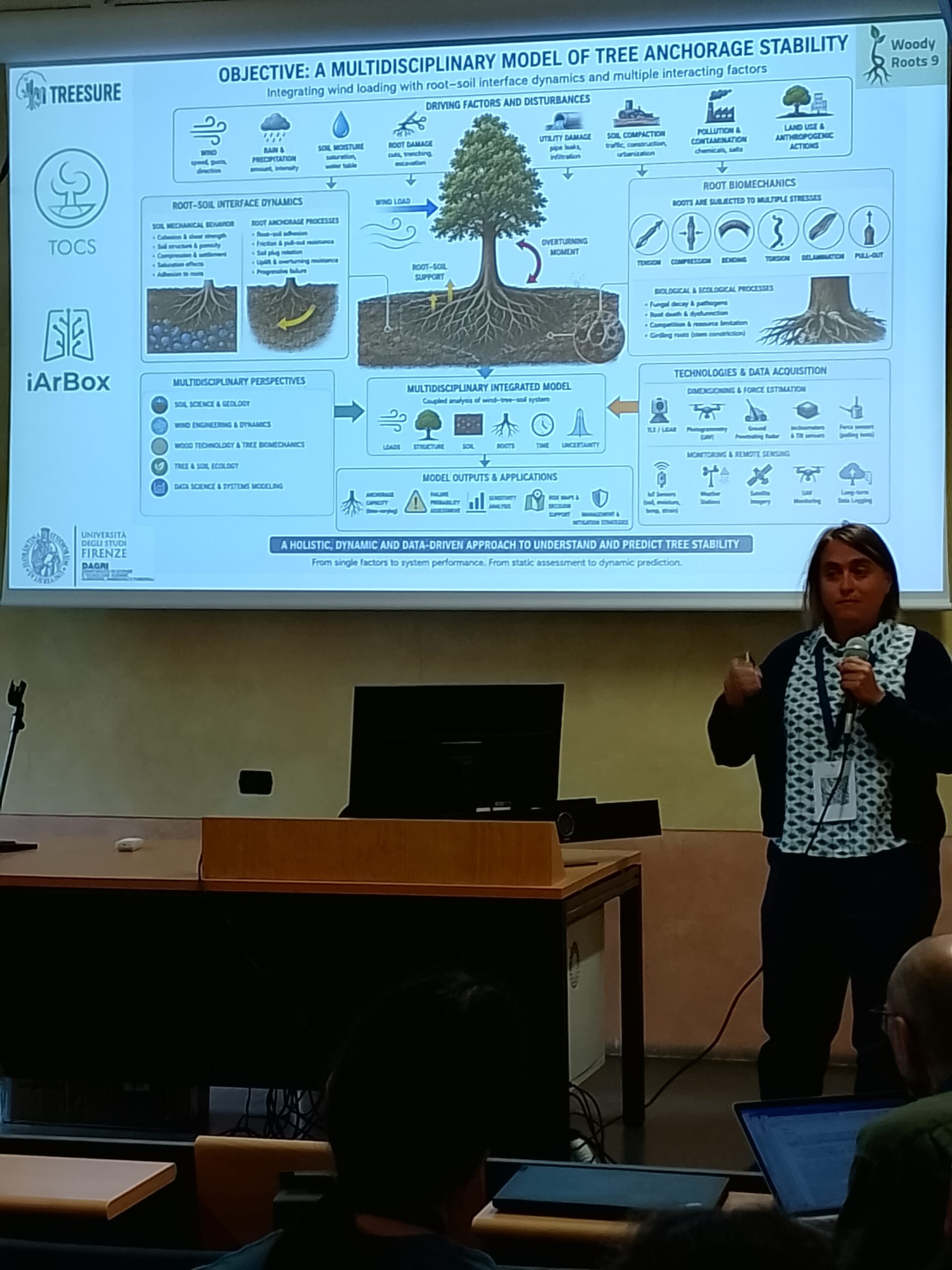
Roots and soil form a living, dynamic system that responds to loading, deforms, and evolves during the process. To truly understand tree stability, we need to understand not only the tree itself, but also how it interacts with the ground that supports it.
Seeing the Invisible
To investigate these hidden processes, the research team combined a range of innovative, non-invasive technologies.
Controlled pulling tests were integrated with laser interferometry capable of detecting sub-micrometric trunk movements, 3D laser scanning for the creation of digital tree models, continuous monitoring of growth and soil moisture, and advanced geophysical techniques such as Electrical Resistivity Tomography (ERT) and Mise-à-la-Masse (MALM).
Together, these approaches allow researchers to observe both above-ground and below-ground responses, providing a much more complete picture of how trees resist external forces.
The ultimate goal is to move beyond traditional approaches and develop biomechanical models that explicitly account for root–soil interactions.
From Trees to Root–Soil Systems
One of the most important outcomes emerging from this work is a shift in perspective.
Rather than considering stability as a property of the tree alone, we should view it as a property of the entire root–soil–plant system.
Under increasing loads, roots may bend, twist, break, or detach from the surrounding soil. At the same time, soil can compact, deform, and redistribute forces throughout the anchorage zone. These processes influence the stability of the whole system and should be incorporated into future assessment methods.
In other words, evaluating a tree without considering the dynamic behaviour of roots and soil is a bit like evaluating a building without looking at its foundations.
And, as Pisa reminds us, foundations matter.
Science Through Collaboration
This research is the result of a multidisciplinary collaboration involving expertise in forestry, geophysics, biomechanics, environmental monitoring, remote sensing, and digital modelling.
The work was developed by Y. Giambastiani, M. Censini, M. Locatelli, F. Preti, G. Cassiani, A. Dani, G. Bartoli, A. Giachetti, G. Zini, I. Incollu, G.F. Censini, E. Pugliese, T. Tognetti, and F. Giannetti, whose complementary skills have contributed to advancing our understanding of tree anchorage and stability.
The study is part of the TREESURE Project, funded by the European Union, which aims to improve tree stability assessment through innovative monitoring technologies and advanced modelling approaches and a collaboration with iArbox – Framework per la conservazione degli alberi vetusti in ambiente urbano – Finanziato da PNRR Missione 4 – Programma NBFC
Supporting the Next Generation of Researchers
The symposium also provided an excellent opportunity for young scientists to engage with the international research community.
Among the participants was Gabriele D’Angelo, a Master’s student in Forest Sciences and Technologies at the University of Florence, who is beginning his research activities on root–soil–plant interactions. His work will contribute to future developments in understanding the complex mechanisms that govern tree stability and ecosystem resilience.
As climate change increases the frequency and intensity of extreme weather events, improving our knowledge of how trees interact with the soil that supports them is becoming more important than ever.
After all, whether we are talking about buildings or trees, stability starts from the ground up.